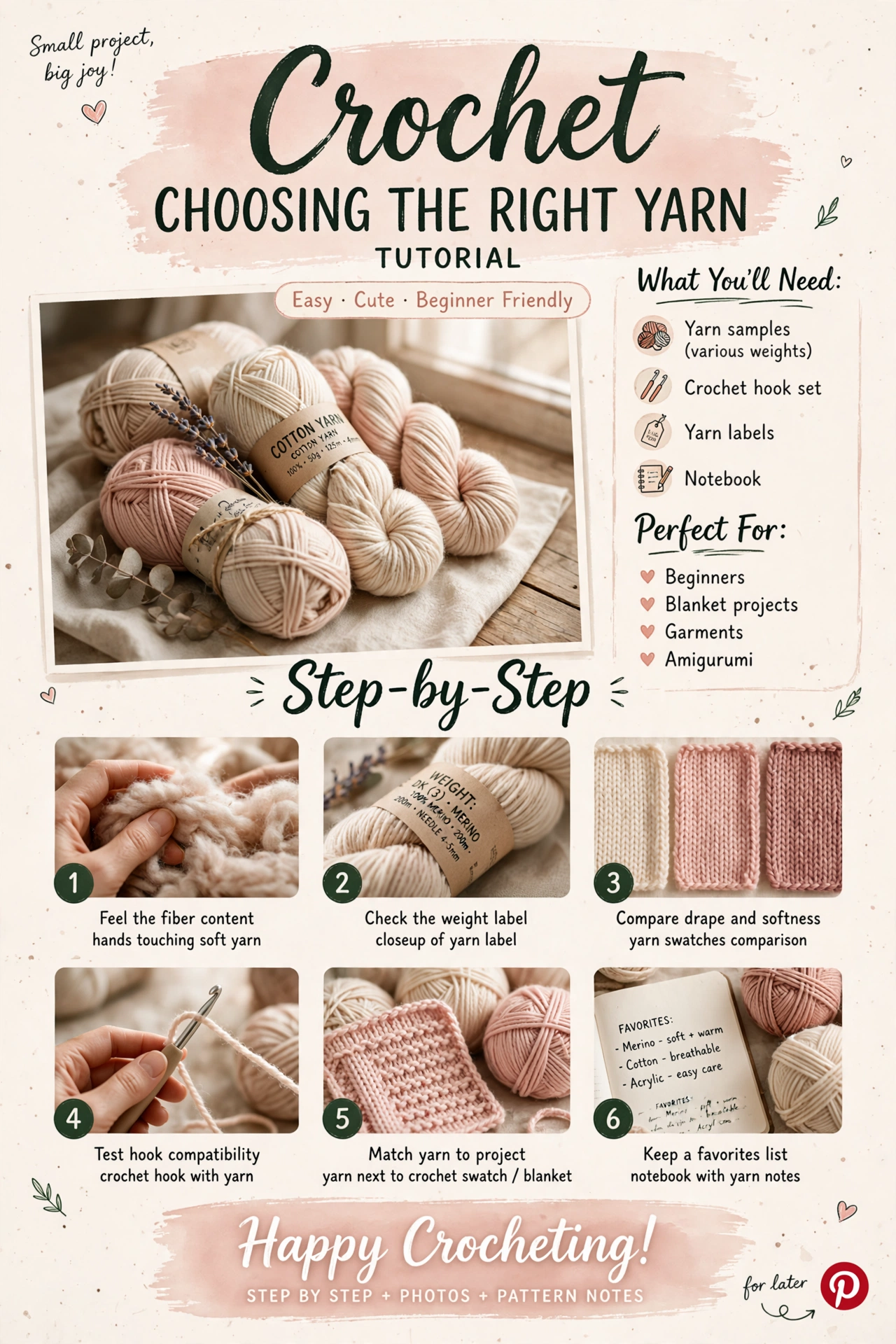
Hey, it’s Sara — a no-fuss guide to yarn weights, fibers, and what to buy for your next project.
Hey, it’s Sara
Yarn aisles can feel like a test you didn’t study for. I’m Sara — and after years of making wearables, amigurumi, and home stuff, here’s the practical version I wish someone had given me on day one.
Yarn weights that actually matter
In the US we use Craft Yarn Council categories. You don’t need to memorize every number — know these:
- 1–2 (fingering / sport): delicate lace, light shawls, fine amigurumi details.
- 3 (DK / light worsted): great all-rounder for garments and softer amigurumi.
- 4 (worsted / aran): my default for beginners — blankets, scarves, most tutorials on this site.
- 5–6 (bulky / super bulky): fast hats, chunky throws, statement pieces.
If a pattern says “worsted” and you grab bulky, your project will come out bigger and denser. Match the category first; brand second.
Fibers in plain English
Acrylic
Affordable, washable, huge color range. Perfect for practice, kids’ items, and anything that will see a washing machine. Can feel less “breathable” against skin in summer.
Cotton
Crisp stitch definition, great for bags, coasters, summer tops. Less stretch than acrylic — good for structure, less forgiving on tension mistakes.
Wool & wool blends
Warm, elastic, blocks beautifully. Check care: some are superwash, some are hand-wash only. Lovely for winter accessories.
Blends
Often the sweet spot — acrylic/wool for warmth + easy care, cotton/acrylic for bags that hold shape but don’t cost a fortune.
How I choose yarn for a project
- What is it for? Wearable near skin → softer fiber. Dishcloth → cotton. Kid toy → durable and washable.
- What does the pattern assume? Match the weight category on the pattern label.
- Hook pairing: worsted often likes 5.0–5.5 mm; DK 3.5–4.5 mm; bulky 6.5–9 mm. Adjust if your fabric feels stiff or holey.
- Swatch when size matters (garments, fitted hats). A 4×4 in (10×10 cm) square in the stitch pattern saves tears later.
Reading the label
Look for: weight category number, recommended hook, gauge (sts × rows over 4 in / 10 cm), fiber %, care symbols, and dye lot. Buy enough from the same dye lot for big projects — colors can shift between batches.
Three yarn choices I would not make blindly
Very fuzzy yarn for a first project: it can hide the top loops of each stitch, which makes counting and fixing mistakes harder. Single-ply yarn for something that gets rubbed constantly: it can pill faster than a firmly twisted yarn. Heavy cotton for a large wearable: cotton can become surprisingly weighty once there is a whole garment hanging from the shoulders.
Color matters for learning, too. A smooth, light or medium-colored yarn makes stitch anatomy easier to see than black, navy, eyelash yarn, or a busy variegated color.
Substituting yarn without guessing
When the exact yarn in a pattern is unavailable, I compare four things: yarn weight, fiber, meters or yards per 100 g, and the fabric I get after swatching. Two skeins can both say “worsted” and still behave differently. If size matters, the swatch decides—not the label.
For toys, I want dense fabric that keeps stuffing inside; see my amigurumi yarn guide. For a first scarf or blanket, a smooth category 4 yarn is much easier to read while you work.
Final note from Sara
There is no morally correct yarn. There’s only “does this fabric feel right for this project?” Trust your hands.
Yarn test you can actually repeat
Recommended beginner test: smooth worsted-weight #4 yarn with a 5 mm hook. This is a starting example, not a universal yarn prescription.
Gauge & finished fabric
Make a 15 × 16-stitch practice swatch in single crochet. Aim for roughly 10 cm (4 in) if your project calls for that gauge. Record the yarn, hook, stitch count and measured size so you can reproduce the result.
Numbered comparison
- Choose two yarns in the same weight category.
- Chain 17 and work 10 rows of sc with the same hook.
- Count stitches and rows in the center area without stretching.
- Compare drape, stitch definition and surface texture.
- Wash a small swatch according to its care label and measure again.
Example choices
Smooth cotton is useful for clearly defined coasters and bags. Acrylic can be practical for blankets that need easy care. Wool can provide warmth and elasticity. Always check the label and the intended use rather than choosing only by fiber name.
Care
Keep the yarn label until the project is finished. It contains washing and drying guidance and often the dye-lot information needed for additional skeins.